
Tabriz Rugs
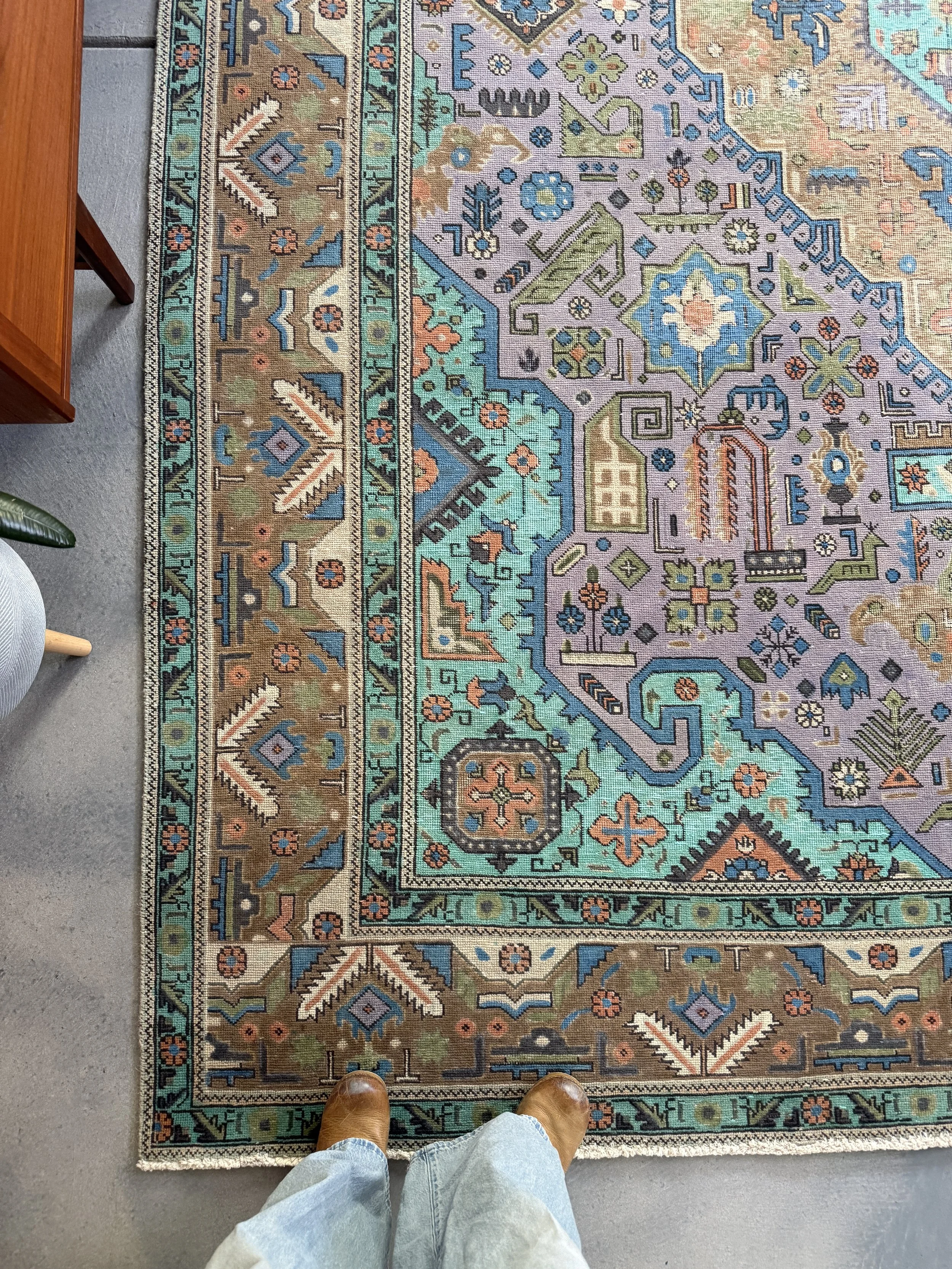
Vintage Tabriz rugs are among the most celebrated Persian carpets, known for their intricate artistry, fine craftsmanship, and deep cultural heritage. Originating from the historic city of Tabriz in northwestern Iran, these rugs have been woven for centuries, reflecting the region’s long-standing reputation as a center of art, trade, and culture.
Origin and History
Tabriz has been a major hub for carpet weaving since at least the 13th century. Positioned along the Silk Road, the city became a melting pot of artistic influences from Persia, the Ottoman Empire, and Central Asia. The weavers of Tabriz developed a distinctive style characterized by precision, symmetry, and elaborate motifs, often inspired by Persian poetry, gardens, and architecture.
Cultural Significance
Beyond their decorative appeal, Tabriz rugs hold deep cultural meaning. They symbolize Persian artistry and craftsmanship, often passed down through generations as family heirlooms. Each rug tells a story—of the weaver’s skill, the region’s history, and the enduring beauty of Persian design. Collectors and connoisseurs value them not only for their aesthetic qualities but also for their connection to Iran’s cultural identity.
Craftsmanship and Materials
Creating a Tabriz rug is a meticulous process that can take months or even years. Skilled artisans use high-quality wool, silk, or a blend of both, dyed with natural pigments to achieve rich, lasting colors. The weaving technique involves a dense knot count, allowing for detailed patterns such as medallions, floral motifs, and arabesques. The result is a rug that combines durability with exquisite artistry.
Enduring Appeal
Today, vintage Tabriz rugs remain highly sought after for their elegance and timeless charm. Whether displayed in traditional or modern interiors, they bring warmth, history, and sophistication to any space—an enduring testament to the artistry of Persian weaving.