
Herki Rugs
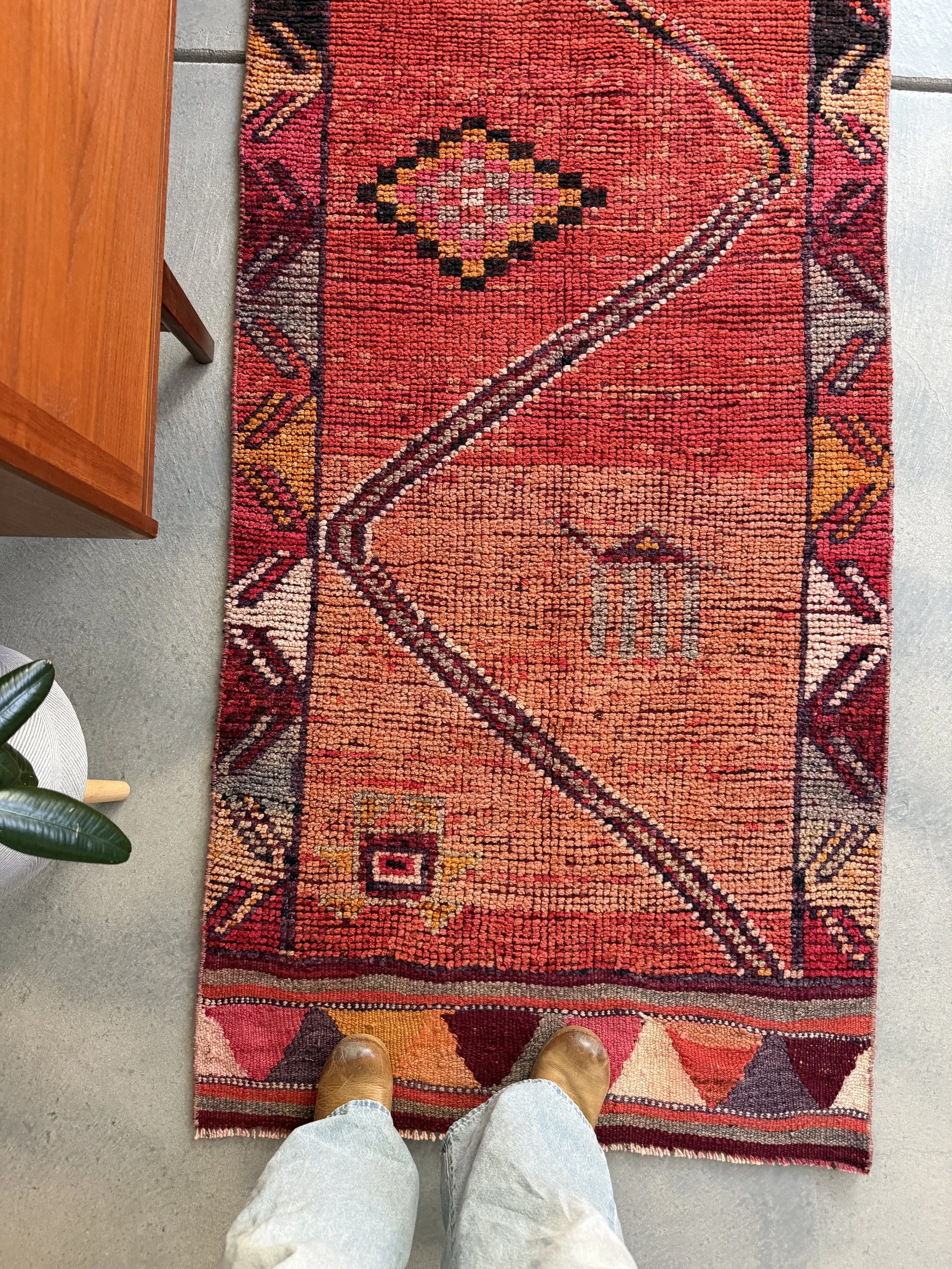
Tucked away in the rugged mountains of southeastern Turkey, the Herki tribe has been weaving extraordinary rugs for centuries. These aren't your typical Turkish carpets—Herki rugs carry the wild, untamed spirit of Kurdish nomadic life, and each one tells a story written in wool and natural dyes.
A Nomadic Heritage
The Herki people are part of the larger Kurdish tribal confederation, traditionally moving their flocks between summer and winter pastures in the mountainous regions near the Iraqi and Iranian borders. Their rugs emerged from necessity—portable warmth for tent floors—but evolved into powerful expressions of identity and artistry. Most vintage Herki rugs date from the late 19th to mid-20th century, representing a golden age before synthetic dyes and modern life altered traditional weaving practices.
Cultural Threads
For the Herki tribe, rug weaving was women's work and women's art. Mothers taught daughters at the loom, passing down not just technique but tribal memory. These rugs served as dowry pieces, family heirlooms, and markers of status. The bold, geometric patterns weren't just decorative—they carried protective symbols, fertility motifs, and abstract representations of the natural world that surrounded nomadic life.
The Making of a Herki
Herki rugs are hand-knotted using the symmetrical Turkish (Ghiordes) knot on wool foundations. The wool comes from local sheep, hand-spun and dyed with natural materials: madder root for reds, indigo for blues, walnut husks for browns. The weaving happens on horizontal ground looms that can be dismantled and moved—essential for nomadic life.
The knotting is relatively coarse compared to city rugs, typically ranging from 40-80 knots per square inch. But this isn't a flaw—it's part of their charm. The looser weave creates a supple, almost floppy handle that drapes beautifully and develops a lovely patina with age.
How to Spot a Herki
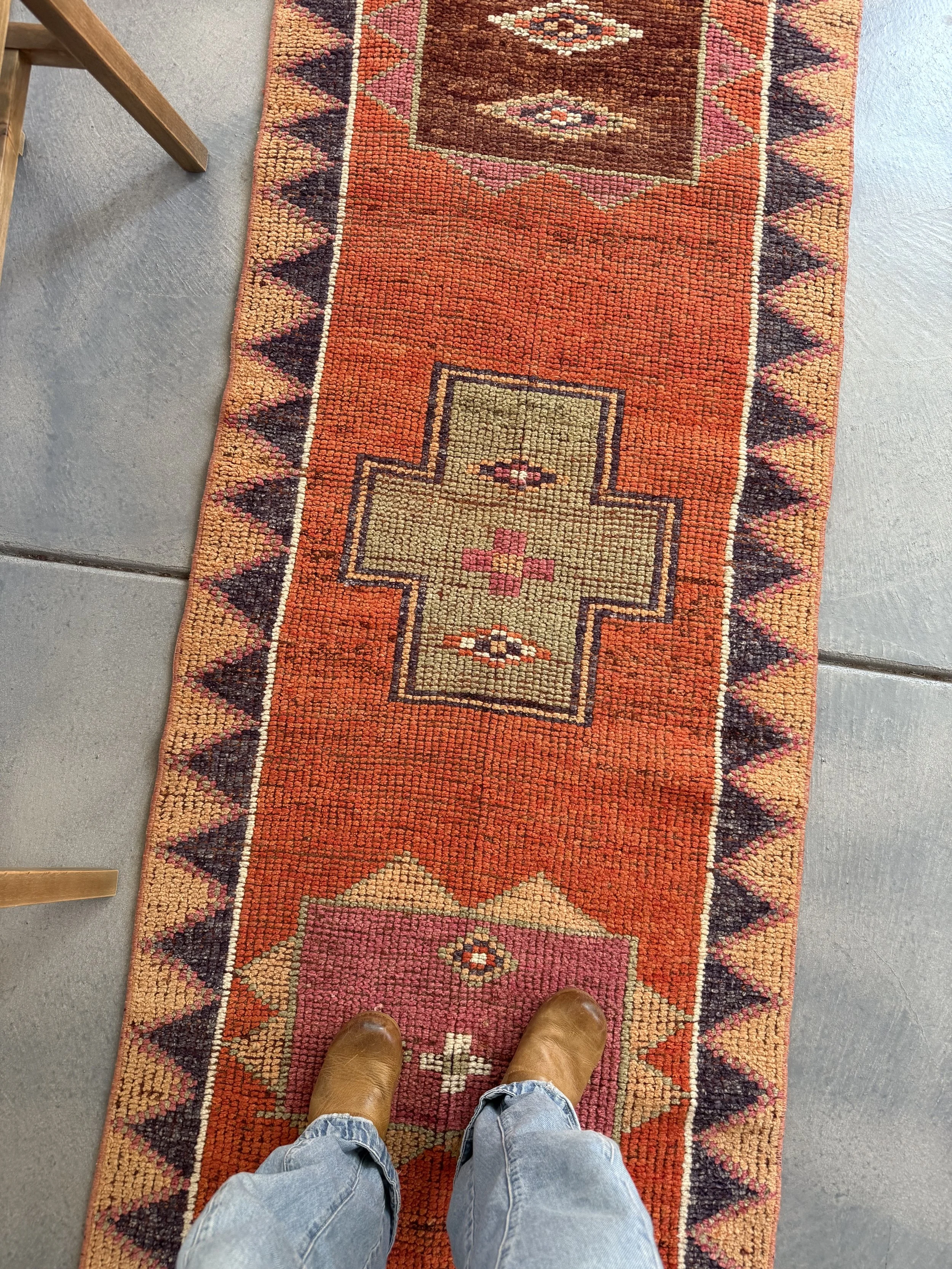
Bold, geometric designs with large-scale medallions, often featuring hooked diamonds or angular stars
Vibrant color palettes dominated by rich reds, deep blues, and warm camel tones, often with surprising pops of orange or green
Tribal borders with repeating geometric motifs rather than the flowing floral patterns of city rugs
Asymmetrical layouts and "imperfections" that reveal the weaver's hand—no two are exactly alike
Long, shaggy pile in vintage pieces, though many show beautiful wear patterns from decades of use
Kilim ends with striped or banded patterns in complementary colors
The overall aesthetic is raw, graphic, and unapologetically bold—these rugs command attention rather than quietly complementing a space.
Why Collectors Love Them
Vintage Herki rugs have become increasingly sought-after by collectors and designers who appreciate their authenticity and visual punch. They bring warmth without fussiness, pattern without pretension. In an age of mass production, these hand-knotted pieces represent something increasingly rare: objects made slowly, with skill, carrying genuine cultural heritage in every knot.
Whether anchoring a minimalist modern space or adding depth to a layered bohemian interior, a vintage Herki rug brings that ineffable quality that only comes from something made by hand, with purpose, generations ago